Home / Services
Services we offer
From backup power to a single loose outlet, here's a closer look at the work we do. If you don't see your project, ask. If it's electrical and it's in your home, we can almost certainly help.
Standby generators
Keep your home running when the power goes out.
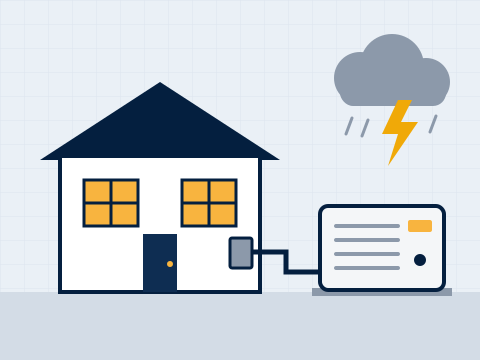
Standby generators come in many different sizes. A larger unit can back up your entire home, including heating and air conditioning. A smaller one can cover just the essentials, like your furnace, well pump, sump pump, refrigerator, and a few lights and outlets.
We help you decide how much of your home you want covered, size the generator to match, and install it with a transfer switch that keeps your home and the utility lines safely separated.
- Whole-home or essential-circuit coverage
- Load calculations and proper sizing
- Transfer switch installation
- Ongoing maintenance and repair
Panel and service upgrades
The heart of your electrical system, brought up to date.
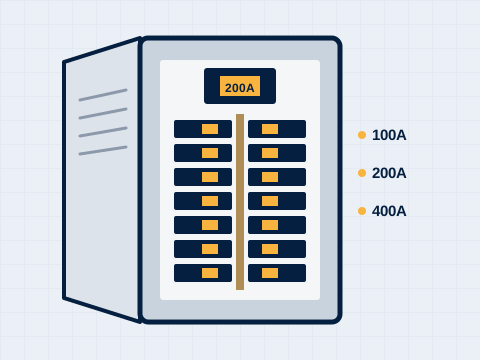
We handle services of all sizes, from 100-amp upgrades to 200-amp and larger. Electrical panels are commonly estimated to last around 25 to 40 years, and many homes are still running on panels older than that.
An aging panel can have worn breakers, loose connections, and too little capacity for today's demands like central air, electric vehicle chargers, and modern kitchens. Replacing it gives your home a safe, reliable foundation and room to grow.
- Panel replacements
- Service upgrades of all sizes
- Fuse box replacements
- Subpanels for additions, garages, and workshops
Troubleshooting and repairs
When something isn't working right, we track down why.
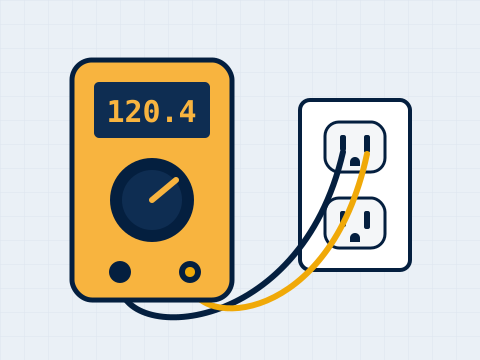
Electrical problems often hide behind walls and ceilings. We use specialized testing tools and a methodical process to trace each problem to its source instead of guessing or swapping parts until something works.
Whether it's a dead outlet, a breaker that won't stay on, or lights that flicker for no clear reason, we'll find the problem or give you a clear solution and an honest price to fix it.
- Dead outlets and circuits
- Breakers that trip repeatedly
- Flickering or dimming lights
- Partial power loss
Rewiring
Replace outdated wiring before it becomes a hazard.
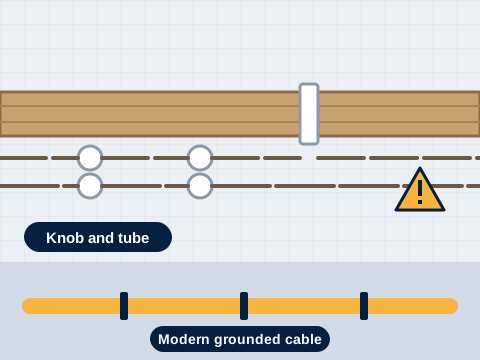
Many older homes still rely on wiring methods that were never designed for the way we use electricity today. Knob-and-tube wiring, common in homes built in the early 1900s, has no ground wire, and its insulation can become brittle and crack with age. It also wasn't designed to be buried under modern insulation, where it can overheat.
Other antiquated methods can be dangerous too, including ungrounded two-wire circuits, cloth-insulated cable, and aluminum branch wiring. The U.S. Consumer Product Safety Commission has warned about the hazards of aluminum wiring, which was installed in about two million homes built between the late 1960s and early 1970s.
- Knob-and-tube replacement
- Whole-home and partial rewiring
- Grounding upgrades
- Aluminum and cloth wiring replacement
Source: U.S. Consumer Product Safety Commission.
Book nowEV chargers
Fast, reliable charging in your own garage.
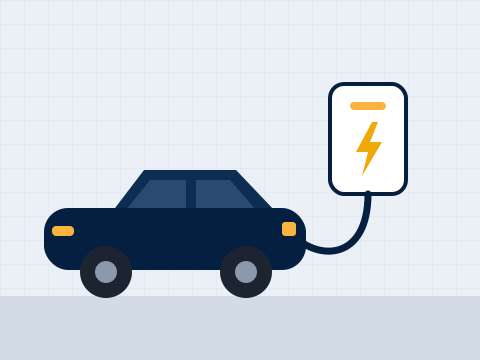
A Level 2 charger runs on a dedicated 240-volt circuit and charges an electric vehicle much faster than a standard wall outlet. Before we install one, we check whether your panel has the capacity for it, so your new charger never overloads your system.
- Panel capacity check
- Dedicated 240-volt circuit
- Charger mounting and setup
- Indoor and outdoor installations
GFCI and AFCI protection
Two small devices that prevent shocks and fires.
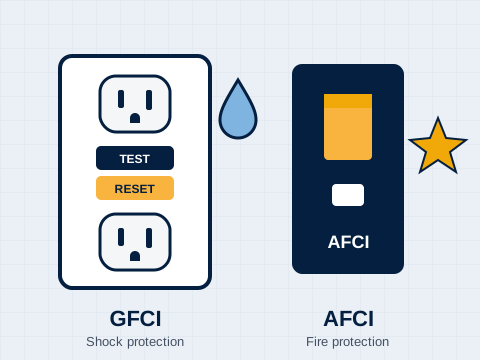
You've probably seen the outlets with TEST and RESET buttons in a kitchen or bathroom. That's a GFCI. Its partner, the AFCI, usually lives in your electrical panel as a special breaker. They guard against different dangers, and together they're some of the most important safety devices in a modern home.
Why it matters: GFCIs protect people from shock, and AFCIs protect homes from fire. Current electrical code requires this protection in many areas of the home, but many older homes have little or none. We can add it with protected outlets or breakers.
GFCI
Ground-fault circuit interrupter
A GFCI constantly compares the electricity flowing out on a circuit with what comes back. If some is leaking, for example through a person touching a faulty appliance near water, it shuts off the power in a fraction of a second. That's why GFCIs belong in kitchens, bathrooms, laundry areas, garages, basements, and outdoors.
AFCI
Arc-fault circuit interrupter
An AFCI watches for arcing: sparks caused by damaged cords, loose connections, or a nail driven through a wire. Arcing can ignite materials inside a wall without anyone noticing. An AFCI recognizes that dangerous pattern and cuts the power before a fire can start.
Lighting
The right lighting changes how a room looks and feels.
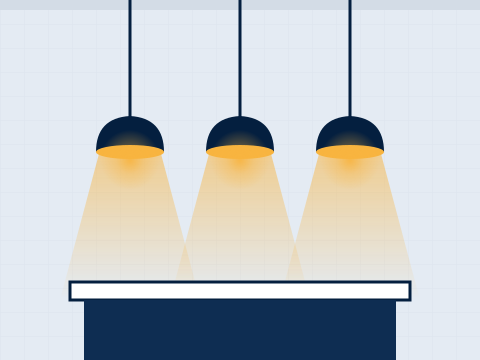
Pendants over a kitchen island, a statement chandelier in the dining room, sconces along a hallway, or recessed lighting throughout: good lighting makes a home feel finished. We install it cleanly and safely, with properly supported boxes, the right wiring, and dimmers wherever you want them.

- Decorative fixtures and chandeliers
- Recessed and under-cabinet lighting
- Exterior and security lighting
- Dimmers and smart controls
Outlets and switches
A safety fix and an easy upgrade in one.
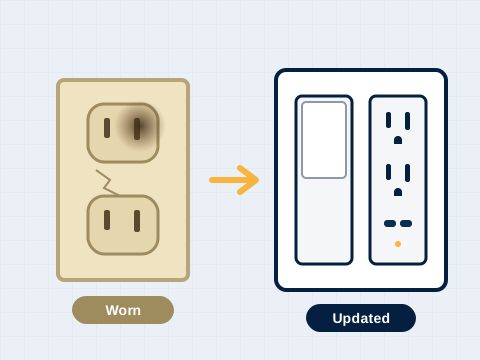
Outlets and switches wear out over time. The contacts inside loosen, plugs stop holding firmly, and the wire connections can work loose. A loose connection can arc and heat up, which is why a warm or discolored cover plate is a warning sign you shouldn't ignore.
New devices restore a tight, safe connection, and they make a big visual difference. Fresh outlets, switches, and cover plates are one of the simplest ways to make a room look newer, and they're an important part of every remodel.
- Replacing worn or damaged devices
- USB and USB-C outlets
- Dimmers and smart switches
- Tamper-resistant outlets for homes with kids
Surge protection
Protect everything you've plugged in, all at once.
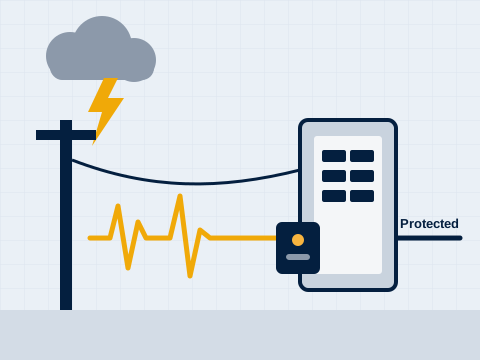
Power surges can come from outside your home, from lightning or utility switching, and from inside it, when large appliances cycle on and off. Today's homes are full of electronics that are sensitive to them: TVs, computers, HVAC controls, and appliances with circuit boards.
A whole-home surge protector installed at your electrical panel is the first line of defense, limiting surges before they travel through your home's circuits. Paired with quality plug-in surge strips for your most sensitive electronics, it gives your home layered protection.
- Whole-home surge protectors installed at the panel
- Protection for appliances, HVAC, and electronics
- Pairs with point-of-use surge strips
Smoke and CO detectors
The simplest upgrade that saves lives.
Working smoke alarms save lives. According to National Fire Protection Association data, missing or non-working smoke alarms play a role in nearly 3 of every 5 home fire deaths, and the risk of dying in a home fire is 54% lower where working alarms are present.
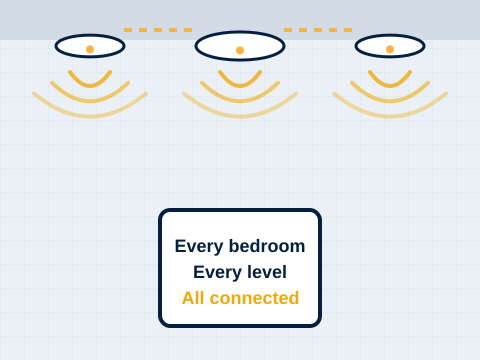
NFPA recommends alarms in every bedroom, outside each sleeping area, and on every level of the home, interconnected so that when one sounds, they all sound. Carbon monoxide is colorless and odorless, so a CO alarm is the only way to know it's there.
- Hardwired, interconnected smoke alarms
- Carbon monoxide and combination alarms
- Replacement of alarms more than 10 years old
Sources: National Fire Protection Association (NFPA).
Book now